When a Previous Surgery Hasn't Worked
If you're reading this, you likely had a spine surgery with hopes of relief—and instead, you're still in pain. Or worse, you're dealing with new symptoms that didn't exist before. That's a devastating position to be in, and I understand the frustration and fear that come with it.
You're not alone. Failed back surgery syndrome (FBSS) affects a significant percentage of spine surgery patients. The good news: it's correctable. But it requires a surgeon who understands not just spine anatomy, but the complexities of salvaging cases that have gone wrong.
That's where I come in.
Over my career, I've become known nationally for one thing: successfully correcting spine surgeries that other surgeons thought were beyond repair. Patients travel from across Texas, the United States, and internationally to my San Antonio and Houston offices specifically because they've been told "your case is too complex" elsewhere.
I don't turn those patients away. These are exactly the cases I was trained for.
Understanding Failed Back Surgery Syndrome
Failed back surgery syndrome is an umbrella term for persistent pain, neurological symptoms, or functional limitations that occur after one or more spine surgeries. It's not a diagnosis of failure on your part—it's a clinical reality that reflects the complexity of spine surgery.
Why does it happen? Several reasons:
Incomplete decompression — The original surgery may not have fully relieved the pressure on the nerve. Sometimes scar tissue forms in the exact location where the surgeon worked, or subtle stenosis remains that wasn't addressed.
Hardware issues — Screws loosen, rods break, cages migrate, or fusion implants fail. Metal fatigue, incorrect placement, or osteoporosis can all contribute.
Adjacent segment disease — When you fuse one level, the segments above and below it bear increased load. Over months or years, these adjacent discs can degenerate and cause spinal stenosis or pain—sometimes as bad as the original problem.
Incorrect diagnosis — The original surgery addressed the wrong problem. What looked like a nerve compression on imaging may have actually been referred pain from facet arthritis or a muscular dysfunction.
Infection — Even with sterile technique, deep infections can develop months or years after surgery, causing inflammation, scar tissue, and pain.
Misalignment or inadequate reconstruction — The spine was fused in an abnormal position, or the decompression was too aggressive and created instability.
Scar tissue formation — Epidural fibrosis (scarring in the spinal canal) can re-compress nerves and restrict their movement.
The key point: failed back surgery syndrome is treatable. But treatment requires understanding why the first surgery failed.
Why Revision Surgery Requires a Different Surgeon
Let me be direct: not every spine surgeon is equipped to handle revision cases.
Revision surgery is technically demanding. You're working in a field scarred from the prior operation. Anatomy is distorted by scar tissue. Nerve tissue is often inflamed and more vulnerable. Hardware may be in the way. And you're carrying the psychological burden of knowing that one surgery already disappointed you.
A revision surgeon needs:
Exceptional anatomical knowledge — Both bone anatomy and nerve anatomy. My combined training at Mayo Clinic in orthopedic spine surgery and neurosurgery gave me the rare advantage of understanding the full picture. I can navigate around scar tissue, identify vital structures, and reconstruct the spine with precision.
Experience with complex cases — You don't learn revision surgery on straightforward cases. You learn it by handling the difficult ones. I've managed hundreds of complex revisions—hardware removals, multilevel decompressions, corrections of failed fusions, and extensive reconstructions.
Willingness to think differently — Sometimes the solution isn't more surgery in the same location. Sometimes it's a staged approach. Sometimes it's removing hardware that never should have been placed. Sometimes it's extending a fusion to a different level than the original surgeon addressed.
Humility and adaptability — What works on the first surgery may not work on the second. You have to be willing to change your plan based on what you find intraoperatively. You have to know when to stop, when to refer to another specialist, and how to manage complications.
I've earned national recognition for revision surgery because I bring all of these elements. My training as Chief of Air Force Spine Surgery—managing combat-related and high-complexity spine injuries—further refined my ability to handle the toughest cases.
My Approach to Complex Revisions
Every revision case is unique. But my process is disciplined and thorough.
Step One: Understand the Prior Surgery
I begin by requesting and carefully reviewing all prior imaging—MRI, CT, X-rays, and sometimes imaging from years before the surgery. I also get the operative report from the first surgery. I want to know exactly what was done, why it was done, and what the surgeon found.
Then I perform a fresh clinical evaluation. I listen to your story—when did the pain start after surgery, where is it, what makes it better or worse. I do a detailed neurological exam. I correlate your clinical presentation with the imaging. Often, this detective work reveals the root cause of failure.
Step Two: Advanced Imaging
Sometimes standard MRI isn't enough. I may order CT with metal artifact reduction (MARS imaging) to see hardware clearly despite implants. I might use dynamic imaging—bending and extension views—to understand how your spine moves and where instability or impingement occurs. Occasionally, a discography or provocative testing helps confirm which disc or facet is painful.
Step Three: Develop a Tailored Surgical Plan
Based on this comprehensive evaluation, I develop a surgical strategy specific to your problem. This might be:
- Hardware removal and reconstruction — If your implants have failed or are causing problems, we remove them and restabilize the spine, possibly with new hardware positioned differently or at different levels.
- Staged fusion — For complex cases, especially those involving multiple levels or severe deformity, a staged approach (surgery now, a second surgery weeks later) allows better planning and less risk during each operation.
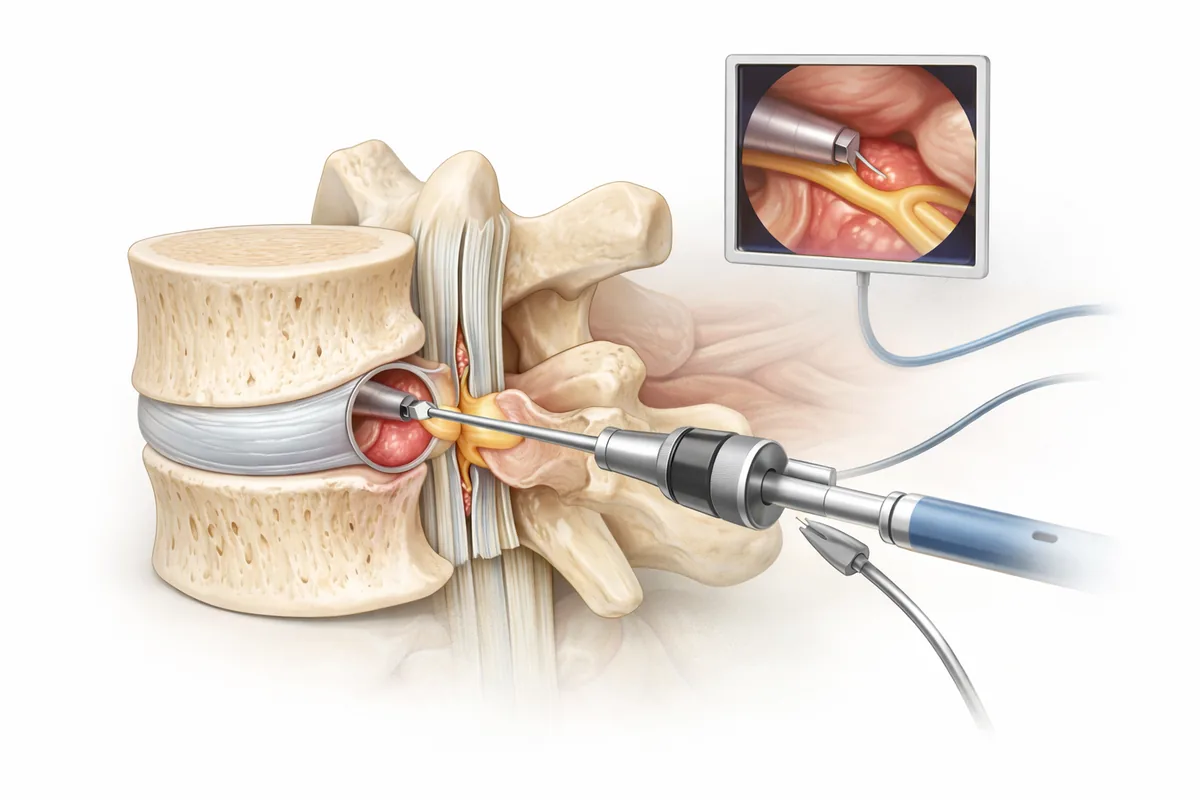
- Decompression of residual stenosis — If the original surgery didn't fully decompress the nerve, I carefully remove additional bone and scar tissue to expand the spinal canal and foramen.
- Correction of deformity — If your spine healed in an abnormal position, I may need to realign and resecure it—demanding work that requires both technical precision and understanding of biomechanics.
- Extension of fusion — If adjacent segment disease has developed above or below the prior fusion, extending the fusion may be necessary. This is done only after conservative treatment has failed.
My combined orthopedic-neurosurgical training is invaluable here. I'm thinking like an orthopedic surgeon about bone stability and like a neurosurgeon about nerve safety. That dual perspective guides safer, more effective surgery.
What to Expect
Revision surgery is performed under general anesthesia. Depending on complexity, you may be positioned prone (face down) or supine (face up). I make incisions—sometimes using the same scar from the prior surgery, sometimes making new incisions to approach the spine from a different angle.
Once inside, I carefully navigate the scar tissue. My experience with scar formation helps me identify planes and tissues safely. If hardware is present, I assess it—is it intact, loose, or causing problems? Does it need to come out?
I then address the primary problem: decompressing residual stenosis, removing problematic hardware, extending a fusion, or reconstructing unstable segments. The specific steps depend on what we find and what your evaluation revealed.
If I need to remove hardware and regain stability, I may place new instrumentation—perhaps at different angles or levels than before. If I'm doing a staged procedure, I may complete only part of the plan today, leaving you time to heal and then returning for the second phase.
Most revision procedures take 2–4 hours, depending on complexity. Many patients go home the same day; some stay overnight for monitoring and pain management.
Recovery After Revision Surgery
Recovery after revision surgery is typically slower than primary surgery because your tissues have already been traumatized once. Scarring, inflammation, and nerve irritability mean you need more time and patience.
First two weeks: Rest and gentle movement
You'll feel immediate relief from any pressure symptoms—if we decompressed a nerve or removed impinging hardware, that relief often comes within hours. Pain from the surgery itself is managed with medication and rest.
Avoid aggressive activity. Walk gently 2–3 times daily. Ice the surgical area as needed. Wear any brace or support I recommend—it reminds you to protect the surgical site and supports healing.
Weeks 2–6: Gradual progression
Continue resting, but gradually increase walking. Physical therapy may begin with gentle, supervised exercises focusing on core stability and spinal protection—not aggressive stretching or strengthening yet.
If you had hardware removed or spine realigned, bracing support may be important for 4–6 weeks to allow healing before bearing full motion.
No lifting, bending, or twisting. Sleep on your back or side with pillow support.
Weeks 6–12: Active rehabilitation
By six weeks, many patients feel substantially better. Physical therapy becomes more active—core strengthening, flexibility, functional retraining. You can return to light activity and desk work.
Full work duties and more strenuous activity depend on your job and how you're healing. We discuss this at your follow-up visits.
Months 3–6: Return to function
Most patients notice maximum pain relief and improvement in neurological symptoms by 3 months. By six months, you should have a clear sense of the outcome. If we fused you, that fusion is solid. If we decompressed you, any nerve healing and inflammation resolution is essentially complete.
Long-term: Ongoing spine health
Even after successful revision surgery, your spine has been through a lot. Maintaining core strength, good posture, and body mechanics is essential. Walking, swimming, and supervised strength training are great. Avoid heavy labor, high-impact sports, and contact sports—your spine is more vulnerable to re-injury.
I encourage all my revision patients to think long-term. Avoid another surgery if possible by respecting your spine's limits and staying engaged in prevention.
Related Conditions
- Failed Back Surgery Syndrome
- Back Pain Treatment
- Spinal Stenosis
- Lumbar Fusion Surgery
- Laminectomy with Fusion
Why Patients Choose Me for Revision Surgery
I've spent my career becoming expert at one thing: correcting failed spine surgeries. Patients don't come to me for routine cases—they come because they've been told their situation is too complex, or because they've tried other surgeons and still aren't better.
That's the position of trust I don't take lightly.
My credentials—Mayo Clinic fellowship in combined orthopedic and neurosurgical spine surgery, former Chief of Air Force Spine Surgery—are relevant because revision surgery demands both perspectives. My national reputation is built on actual outcomes: patients who were told they'd have to live with their pain, and who instead got their lives back.
I have offices in San Antonio and Houston specifically to serve patients across Texas and beyond. Whether you're local or traveling from another state, we have the resources and experience to handle your case.
If you've had a spine surgery that didn't work, you have options. A second opinion costs nothing, and it might change everything.
Schedule a consultation at my San Antonio or Houston office, or call to discuss your case directly.
When This Procedure Is Recommended
- Persistent or worsening pain after a previous spine surgery
- New neurological symptoms following prior surgery
- Numbness, tingling, or weakness that developed after surgery
- Hardware failure, loosening, or migration
- Adjacent segment disease (pain at levels above or below the fusion)
- Incomplete decompression from a prior procedure
- Infection or inflammatory complications
Surgical Techniques
- Hardware Revision or Removal
- Extension of Prior Fusion (Staged Fusion)
- Decompression of Residual or Recurrent Compression
- Correction of Spinal Deformity and Misalignment
- Interbody Reconstruction and Spacer Revision
- Complex Multilevel Revision Surgery
Frequently Asked Questions
What is failed back surgery syndrome and is it treatable?
Failed back surgery syndrome is persistent pain or neurological symptoms after spine surgery. It's treatable—but treatment requires understanding why the first surgery failed. Common causes include incomplete decompression, hardware issues, or adjacent-segment disease.
How does revision surgery differ from primary spine surgery?
Revision surgery is more complex because you're working in a scarred field with distorted anatomy. It requires an experienced surgeon trained in both orthopedic and neurosurgical techniques to navigate safely and reconstruct effectively.
What causes hardware to fail after spine surgery?
Hardware failure can result from loose screws, broken rods, cage migration, or incorrect placement. Osteoporosis, metal fatigue, and spinal instability can all contribute. Advanced imaging helps identify the problem.
Is recovery slower after revision surgery than primary surgery?
Yes, typically. Your tissues have already been traumatized, so scarring, inflammation, and nerve irritability mean you need more time. However, most patients notice significant improvement within 6 weeks to 3 months.
Can revision surgery prevent the need for future surgery?
When revision is done correctly by an experienced surgeon, it addresses the root cause of failure and provides durable relief. This minimizes the likelihood of needing another surgery, though spinal health requires ongoing care.