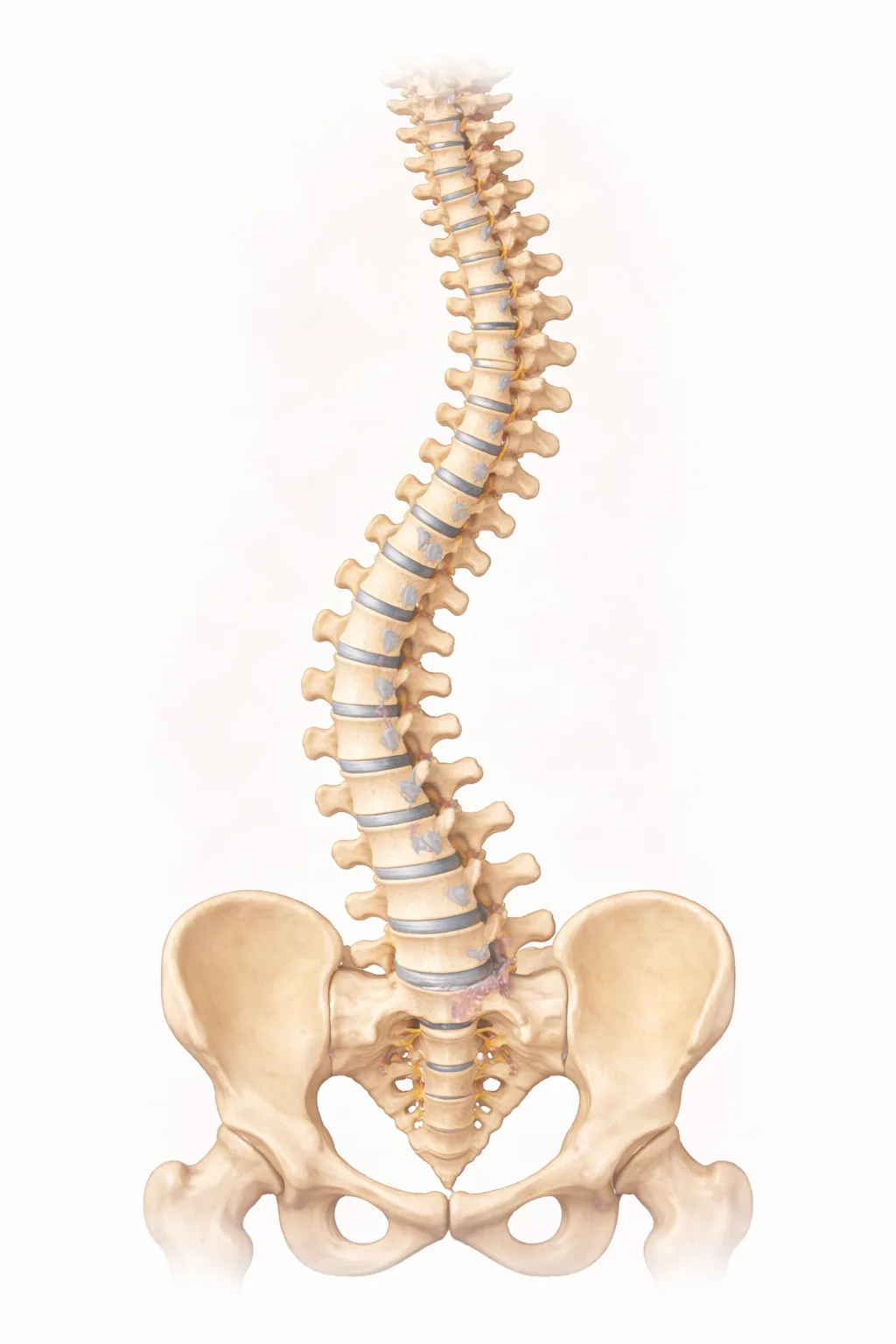
What Is Spinal Deformity?
Spinal deformity describes any abnormal curvature or structural misalignment of the spine. While the healthy spine has gentle natural curves, a deformity involves excessive or irregular curvature that can cause pain, functional limitation, or neurological symptoms. These conditions range from mild cosmetic concerns to severe structural problems requiring surgical intervention.
The most common types include:
- Scoliosis: A lateral (sideways) curve of the spine, often with vertebral rotation
- Kyphosis: Excessive forward curvature, creating a hunched or rounded posture
- Lordosis abnormalities: Disruption of the normal inward curve of the lower back
- Complex multiplanar deformities: Combinations of curves and rotations affecting multiple planes
Causes of Spinal Deformity
Spinal deformities develop through several mechanisms:
Idiopathic scoliosis is the most common form, appearing in adolescents without a clear medical cause. It tends to run in families and affects roughly 2-3% of the population.
Degenerative deformities develop in adults due to disc deterioration, facet joint arthritis, and bone loss over time. Adult degenerative scoliosis is increasingly common as people age, affecting up to one-third of adults over 60.
Congenital deformities result from abnormal vertebral development before birth, where vertebrae fail to form or separate properly.
Neuromuscular deformities occur in conditions like cerebral palsy, muscular dystrophy, or spinal cord injury, where muscle imbalance drives progressive curvature.
Post-surgical or post-traumatic deformities develop after spine surgery or significant spinal injuries, sometimes years later.
Symptoms You May Experience
The symptoms of spinal deformity depend on the severity and location of the curve:
Visible signs include shoulder or hip asymmetry, waist-level asymmetry, or a visibly curved spine. You may notice one shoulder sitting higher than the other or ribs protruding asymmetrically.
Pain is common, especially in the lower back or neck, and may worsen with activity or prolonged sitting.
Functional limitations occur as deformity progresses. Balance problems, fatigue, and reduced exercise tolerance are frequent complaints. Patients often report that their stamina doesn't match their age or fitness level.
Breathing difficulty can develop with severe thoracic (mid-back) curves that compress the lungs and reduce chest cavity volume. This is a serious symptom requiring urgent evaluation.
Neurological symptoms may appear if the deformity compresses nerve roots or the spinal cord itself, causing numbness, tingling, weakness, or pain radiating into the arms or legs.
Postural fatigue is another common complaint—the extra muscular effort required to maintain posture with a deformed spine leads to rapid exhaustion.
When to See a Specialist
You should consult a spine surgeon if you have:
- Progressive curvature, especially in adolescents or young adults
- Moderate to severe deformity with pain or functional impact
- Neurological symptoms (numbness, weakness, loss of balance)
- Breathing difficulty related to spinal curvature
- Deformity worsening despite conservative treatment
- Cosmetic concern affecting quality of life
Early evaluation is important because treatment options often depend on how much the deformity has progressed and whether symptoms are present.
Treatment Approach
Observation and monitoring is appropriate for mild deformities without symptoms. Regular X-rays track progression over time, especially in growing children.
Physical therapy and targeted exercise can strengthen core muscles, improve posture awareness, and reduce pain. PT works best for mild deformities or as part of comprehensive management.
Bracing is effective for adolescents with growing spines and moderate scoliosis. Modern braces are designed to be worn discreetly under clothing and can halt or slow progression during growth years.
Pain management including NSAIDs, epidural injections, or nerve blocks can control symptoms while you explore other options.
Instrumented fusion surgery is the gold standard for significant deformities. This procedure uses rods, screws, and bone graft to straighten and stabilize the spine. Dr. Cyr specializes in these complex procedures, achieving excellent deformity correction while preserving spine function.
Deformity-specific correction techniques address the unique anatomy of each patient. For adult degenerative deformities, less invasive approaches may be used when appropriate. For severe scoliosis, advanced techniques allow correction while minimizing operative time and blood loss.
Dr. Cyr's Expertise in Deformity Correction
As a Mayo Clinic-trained, board-certified orthopedic spine surgeon with expertise in adult scoliosis and complex deformity, Dr. Cyr has helped hundreds of patients achieve better spinal alignment, reduced pain, and improved function. He takes time to understand your specific condition and goals, offering personalized treatment recommendations rather than a one-size-fits-all approach.
Dr. Cyr uses advanced surgical techniques combined with careful perioperative management to achieve excellent outcomes. Whether your deformity is from adolescent scoliosis, degenerative changes, or trauma, he designs a treatment plan tailored to your anatomy and priorities.
If you're experiencing symptoms from spinal deformity or have been told you have one but aren't sure what to do, Dr. Cyr welcomes the opportunity to evaluate you. He maintains offices in both San Antonio and Houston, making access convenient for patients across Texas.
Learn More
To understand your specific condition better, explore these related resources:
Ready to discuss your spinal deformity? Contact Dr. Cyr's office in San Antonio or Houston to schedule a consultation.
Common Symptoms
- Visible asymmetry or curved spine
- Back and neck pain
- Loss of balance or coordination
- Fatigue and reduced stamina
- Breathing difficulties
- Numbness or tingling
Treatment Options
- Physical therapy and exercise
- Pain management
- Bracing for adolescents
- Instrumented fusion surgery
- Deformity correction procedures
Frequently Asked Questions
What is adult scoliosis?
Adult scoliosis develops when degenerative changes—disc deterioration, facet joint arthritis, and bone loss—cause the spine to curve sideways. It affects up to one-third of adults over 60 and can cause pain, fatigue, or neurological symptoms.
Does spinal deformity always cause pain?
No. Many people have scoliosis or kyphosis visible on imaging but no symptoms. Pain develops when the deformity affects nerve roots, causes instability, or creates postural stress. Early intervention can prevent symptom development.
Can physical therapy correct spinal deformity?
Physical therapy cannot reverse an established deformity but can strengthen supporting muscles, improve posture awareness, and reduce pain. Bracing can slow progression in growing children. Surgical fusion corrects significant deformities.
What is kyphosis and how is it treated?
Kyphosis is excessive forward spinal curvature. Mild cases often respond to posture correction and strengthening. Severe kyphosis causing pain, breathing difficulty, or cosmetic concern may benefit from surgical correction.
Where can I see a deformity specialist in Houston?
Dr. Cyr, a Mayo Clinic-trained specialist in spinal deformity, maintains an office in Houston (9125 West Road). He offers comprehensive evaluation and both conservative and surgical options for scoliosis and other deformities.