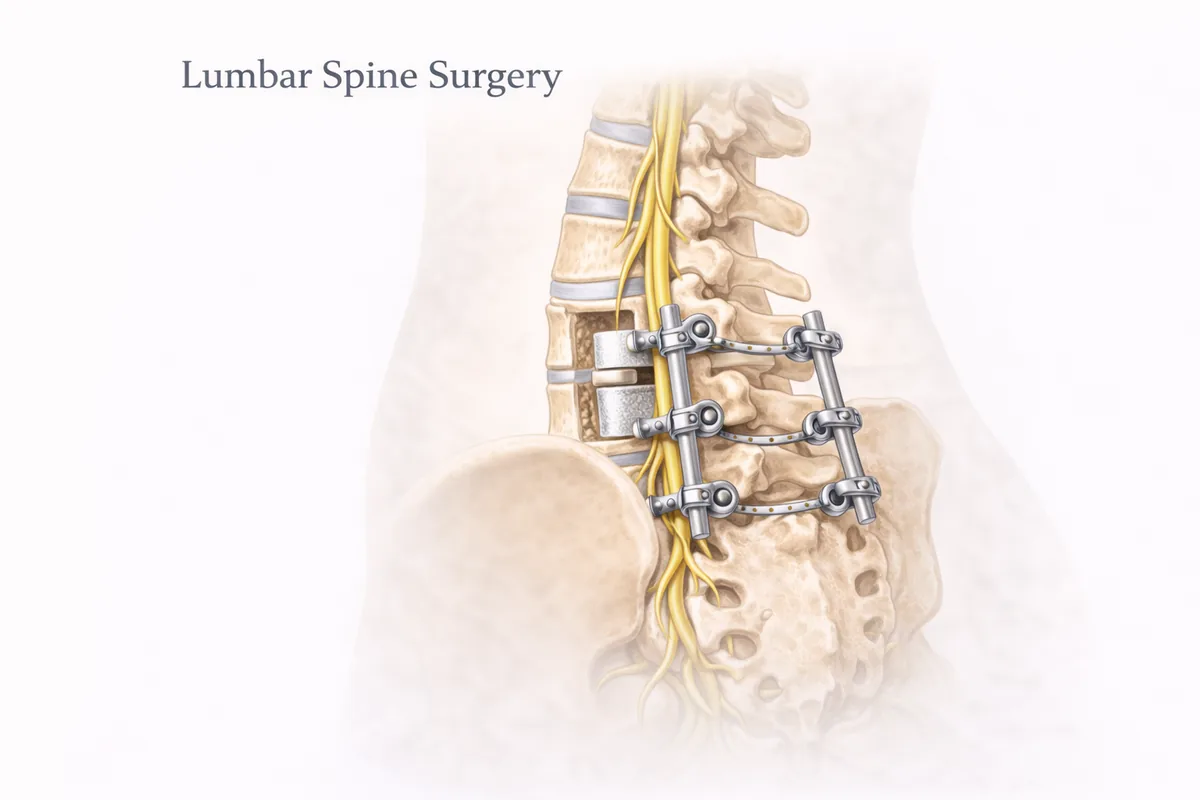
About Lumbar Spine Conditions
The lumbar spine bears the majority of the body's weight and is subject to tremendous mechanical stress, making it the most common site of spine-related problems. Conditions ranging from disc herniations to degenerative disc disease can cause pain that limits mobility and quality of life.
Dr. Cyr has spent over 20 years treating the full spectrum of lumbar spine conditions. His approach combines thorough diagnostic evaluation with the most effective surgical technique for each patient's specific pathology.
Common Lumbar Conditions
Lumbar disc herniation, lumbar spinal stenosis, spondylolisthesis, degenerative disc disease, and cauda equina syndrome are among the conditions most frequently addressed through surgery.
Recovery
Recovery timelines vary by procedure. Minimally invasive approaches typically allow for faster recovery, with many patients returning to daily activities within weeks. Dr. Cyr provides personalized post-operative plans to optimize each patient's recovery trajectory.
Related Reading
- Lower Back Pain Treatment
- Sciatica & Sciatic Nerve Pain
- Lumbar Fusion Surgery
- Laminectomy with Fusion
- Herniated Disc Specialist
When This Procedure Is Recommended
- Persistent lower back pain
- Sciatica — pain radiating into the buttocks and legs
- Numbness or weakness in the legs or feet
- Difficulty standing or walking for extended periods
- Loss of bladder or bowel function (emergency)
Surgical Techniques
- Lumbar Microdiscectomy
- Lumbar Laminectomy / Decompression
- Lumbar Fusion (TLIF, ALIF, PLIF)
- Lumbar Disc Replacement
- Endoscopic Lumbar Discectomy
Frequently Asked Questions
What causes lumbar spine pain and sciatica?
Lumbar pain often comes from disc herniation pressing on nerves (causing sciatica), spinal stenosis narrowing the nerve canal, or degenerative disc disease. Sciatica specifically causes pain radiating down the leg.
How long does it take to recover from lumbar spine surgery?
Recovery depends on the procedure. Minimally invasive approaches allow many patients to return to daily activities within 2–4 weeks. Fusion surgery typically requires 6–8 weeks before returning to work and 3–4 months for full recovery.
Will lumbar spine surgery eliminate my back pain permanently?
Most patients experience significant pain relief from spine surgery when properly selected. The goal is lasting relief, though very rarely pain can recur if new degeneration develops at adjacent levels years later.
What is the difference between disc herniation and spinal stenosis?
Disc herniation is a single disc bulging or rupturing and pressing on a nerve. Spinal stenosis is narrowing of the entire spinal canal from multiple causes like bone spurs, thickened ligaments, or degenerative changes. Both can cause radiating pain.
Can I avoid lumbar surgery with physical therapy and injections?
Yes—conservative treatment works for most lumbar conditions. Physical therapy, medications, and epidural injections provide relief for many patients. Surgery is considered only when these approaches fail and symptoms significantly impact quality of life.