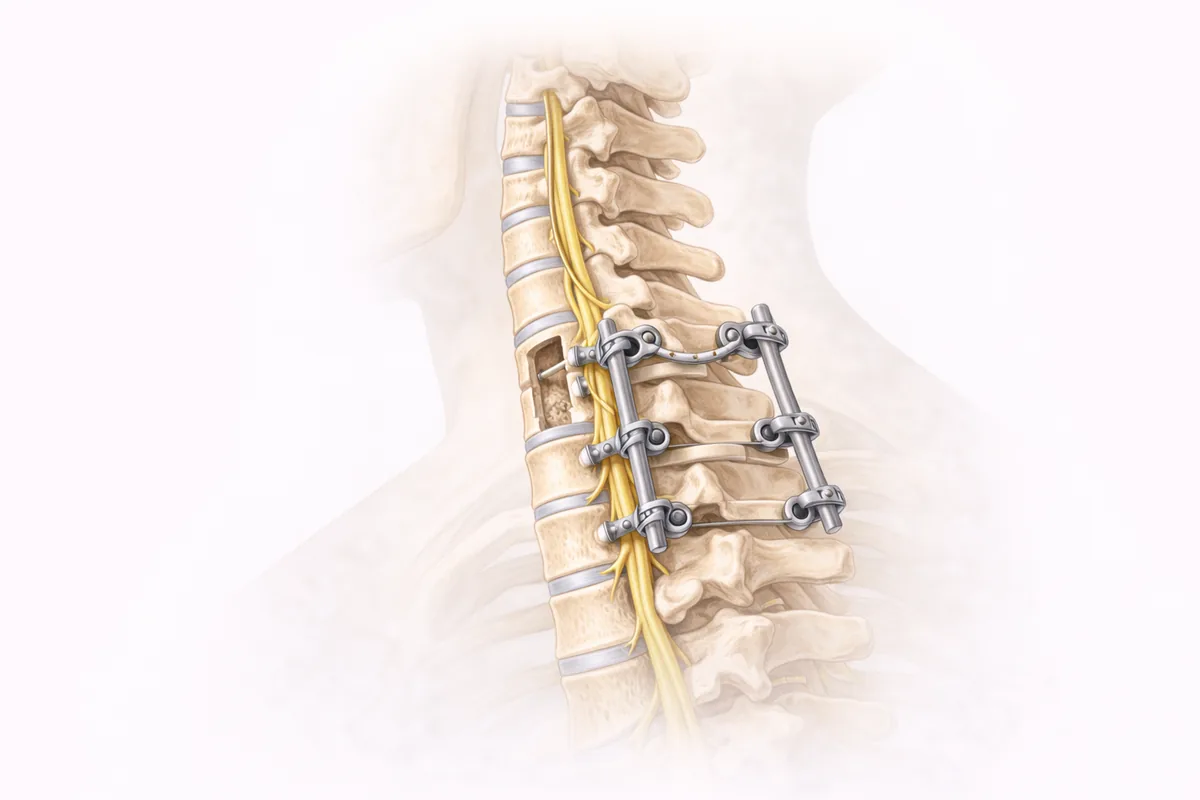
About Thoracic Spine Conditions
The thoracic spine comprises the twelve vertebrae of the mid-back, attached to the rib cage. Because of its relative stability compared to the cervical and lumbar regions, thoracic spine conditions are less common — but when they occur, they can be particularly complex due to the proximity of the spinal cord and vital organs.
Dr. Cyr's combined fellowship in neurosurgery and orthopedic spine surgery at the Mayo Clinic specifically prepared him for the precision required in thoracic procedures, where the margin for error is exceptionally small.
Conditions Treated
Thoracic disc herniation, thoracic spinal stenosis, thoracic compression fractures, Scheuermann's disease, and spinal tumors affecting the thoracic region are among the conditions Dr. Cyr treats surgically.
Surgical Approach
Thoracic spine surgery requires meticulous planning and execution. Dr. Cyr utilizes advanced imaging and, when appropriate, minimally invasive techniques to minimize tissue disruption while achieving effective decompression and stabilization.
Related Reading
When This Procedure Is Recommended
- Mid-back pain that worsens with activity
- Pain radiating around the rib cage
- Numbness or tingling in the torso or legs
- Difficulty with balance or walking
- Muscle weakness below the affected area
Surgical Techniques
- Thoracic Discectomy
- Thoracic Decompression (Laminectomy)
- Thoracic Fusion
- Minimally Invasive Thoracic Surgery
- Endoscopic Approaches
Frequently Asked Questions
Why is thoracic spine surgery more complex than lumbar surgery?
The thoracic spine is attached to the rib cage, sits near vital organs like the lungs and heart, and has a delicate spinal cord with limited space. This requires precision surgery and experienced surgeons trained in the anatomy.
What causes mid-back pain that requires surgery?
Mid-back pain requiring surgery typically comes from thoracic disc herniation, spinal stenosis, compression fractures, or structural abnormalities like Scheuermann's disease. Surgery is considered only after conservative care fails.
How long is recovery from thoracic spine surgery?
Most thoracic procedures allow patients to return to light activities within 2–4 weeks. Full recovery typically takes 6–8 weeks, though some patients experience faster healing with minimally invasive approaches.
Will thoracic spine surgery affect my breathing or heart function?
Thoracic surgery requires careful positioning and technique, but when performed by an experienced surgeon, breathing and heart function are not affected. In fact, relieving spinal compression often improves these functions.
Is thoracic spine surgery common?
Thoracic spine surgery is less common than cervical or lumbar surgery because the thoracic spine is more stable. However, when thoracic conditions develop, they often require surgery from specialized surgeons with extensive experience.