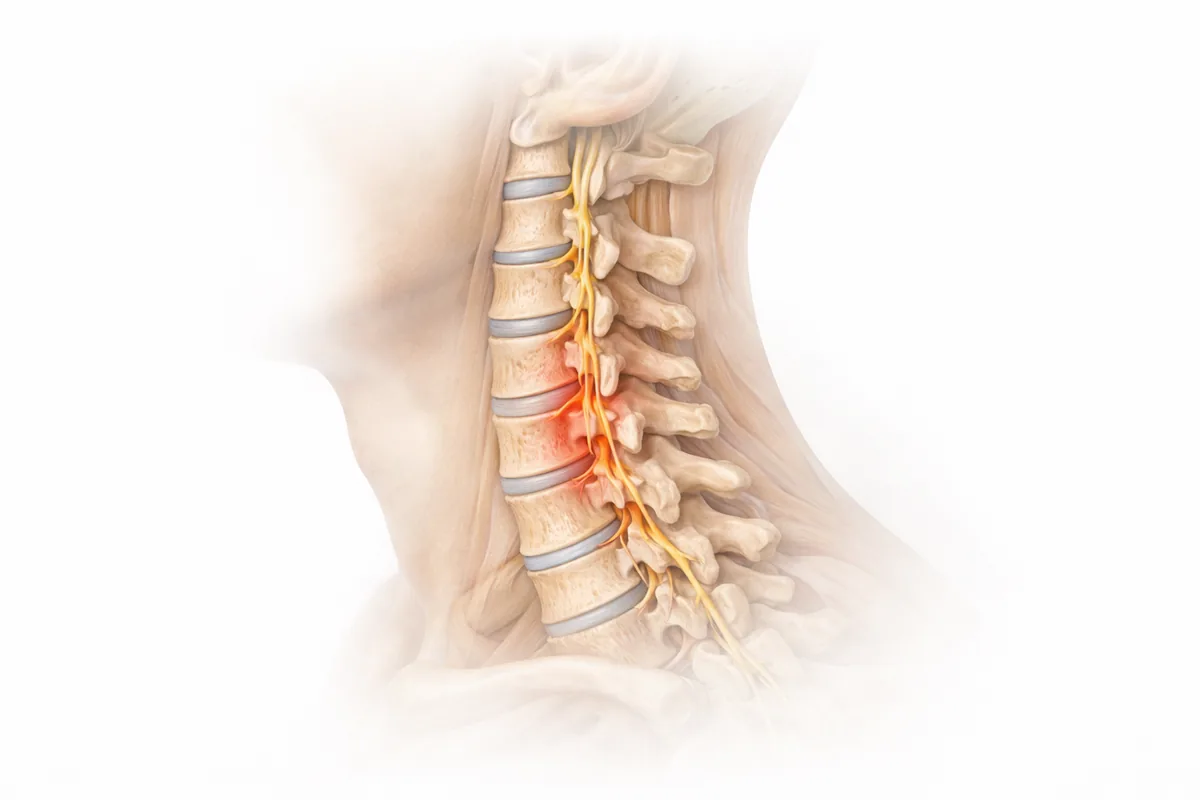
Understanding Neck Pain and Cervical Spine Conditions
Neck pain is one of the most common complaints Dr. Cyr treats in his San Antonio and Houston practices. Your cervical spine—the seven vertebrae (C1 through C7) that support your head and allow it to move freely—is remarkably complex. When something goes wrong in this region, it can cause significant discomfort and affect your quality of life.
Many people experience occasional neck stiffness from poor posture or sleeping position. But persistent neck pain, especially when accompanied by radiating arm symptoms, headaches, or weakness, warrants a professional evaluation. That's where Dr. Cyr's expertise in cervical spine surgery becomes invaluable.
Common Causes of Neck Pain
Muscle Strain The most common cause of acute neck pain is muscle strain from overuse, poor posture, or repetitive stress. Hours spent hunched over a computer—often called "text neck"—can strain the muscles supporting your cervical spine.
Cervical Disc Herniation The discs between your cervical vertebrae act as shock absorbers. When a disc herniates or bulges, it can press on nearby nerves, causing pain, numbness, or tingling that radiates into your arm and hand.
Cervical Stenosis This condition involves narrowing of the spinal canal in your neck. As the canal tightens, it can compress the spinal cord and nerve roots, causing pain, weakness, and neurological symptoms that may worsen over time.
Cervical Spondylosis Also called cervical osteoarthritis, spondylosis develops when degenerative changes occur in the cervical spine. Bone spurs and cartilage loss narrow the space available for nerves, leading to chronic pain and stiffness.
Degenerative Disc Disease (DDD) As you age, the discs in your cervical spine naturally lose water content and elasticity. This degeneration can cause chronic pain and increase your risk for herniation and stenosis.
Whiplash This injury commonly occurs from motor vehicle accidents and involves rapid acceleration-deceleration forces that strain cervical muscles, ligaments, and sometimes damage discs. Symptoms may not appear immediately but can develop over days or weeks.
Poor Posture and Ergonomics Forward head posture, common in today's digital world, places excessive stress on your cervical spine and supporting muscles. Over time, this misalignment can lead to chronic pain and accelerate degenerative changes.
Symptoms You Shouldn't Ignore
Neck pain presents differently depending on the underlying cause and severity. Common symptoms include:
- Stiffness and reduced range of motion that worsens with certain movements
- Localized pain at the site of injury or degeneration
- Radiating pain that travels down your arm to your fingers
- Headaches, particularly at the base of your skull
- Numbness or tingling in your hands or fingers (a sign of nerve involvement)
- Muscle weakness in your arms, shoulders, or hands
- Pain that worsens with certain activities or positions
If you experience severe neck pain after trauma, sudden weakness, loss of bowel or bladder control, or significant neurological symptoms, seek immediate medical attention.
How Dr. Cyr Diagnoses Neck Pain
Diagnosis begins with a thorough physical examination. Dr. Cyr evaluates your range of motion, tests your reflexes and strength, and performs special maneuvers to identify nerve involvement.
Imaging studies often include:
- X-rays to assess bone alignment and degenerative changes
- MRI to visualize discs, nerves, and spinal cord involvement
- CT scans when more detailed bone anatomy is needed
- Nerve conduction studies if neurological symptoms are present
This comprehensive diagnostic approach ensures Dr. Cyr understands exactly what's causing your pain before recommending treatment.
Conservative Treatment Approaches
For most neck pain, conservative treatment is the first-line approach:
Physical Therapy A structured therapy program strengthens the muscles supporting your cervical spine, improves flexibility, and corrects postural imbalances. Regular physical therapy often provides significant relief.
Posture and Ergonomic Correction Dr. Cyr educates patients on proper neck posture during daily activities. Ergonomic adjustments to your workspace and sleeping position can dramatically reduce symptoms.
Anti-Inflammatory Medications NSAIDs and other medications can reduce pain and inflammation while you heal.
Cervical Traction Gentle mechanical or manual traction can decompress irritated nerves and provide symptomatic relief.
Steroid Injections When inflammation around nerve roots causes radiating pain, cervical epidural steroid injections can reduce swelling and alleviate symptoms.
Most patients with uncomplicated neck pain respond well to these conservative measures within 6-12 weeks. However, some conditions require surgical intervention.
When Surgery Becomes Necessary
Dr. Cyr recommends cervical spine surgery when:
- Conservative treatment fails to relieve symptoms after adequate trial (typically 6-12 weeks)
- Progressive neurological deficits develop (weakness, numbness that worsens)
- Spinal cord compression threatens long-term function
- Significant pain or disability significantly impacts quality of life
Anterior Cervical Discectomy and Fusion (ACDF) This is Dr. Cyr's most commonly performed procedure for cervical disc herniation and degenerative disease. The approach involves removing the damaged disc from the front of your neck and fusing the vertebrae together, restoring proper alignment and eliminating pain-causing movement.
Cervical Laminectomy and Foraminotomy When stenosis or bone spurs compress your spinal cord or nerve roots, this posterior approach removes bone and tissue to decompress the affected structures. This procedure is particularly effective for myelopathic symptoms.
Cervical Fusion Whether performed anteriorly or posteriorly, fusion stabilizes your cervical spine and prevents painful motion at the affected level.
Dr. Cyr's Mayo Clinic training and board certification in orthopedic spine surgery ensure you receive cutting-edge surgical techniques with excellent outcomes. He has performed hundreds of cervical spine procedures across his San Antonio and Houston offices.
Next Steps
If you're experiencing persistent neck pain, don't wait for it to worsen. Dr. Cyr offers comprehensive evaluation and personalized treatment plans tailored to your specific condition.
Learn more about cervical spine procedures or read more about cervical lordosis and how spinal alignment affects your health. For cases requiring surgical intervention, explore cervical fusion options.
Schedule a consultation with Dr. Steven Cyr today in San Antonio or Houston to get relief from neck pain and restore your quality of life.
Common Symptoms
- Neck stiffness and limited range of motion
- Radiating pain down the arm
- Headaches and upper back pain
- Numbness or tingling in hands and fingers
- Muscle weakness in arms or hands
- Sharp or dull pain at base of skull
Treatment Options
- Physical therapy and neck strengthening
- Posture correction and ergonomic modification
- Anti-inflammatory medications
- Cervical traction and manual therapy
- Steroid injections for nerve inflammation
- Cervical fusion (ACDF)
- Cervical laminectomy and foraminotomy
Frequently Asked Questions
What causes radiating arm pain from neck problems?
Neck pain with radiating arm symptoms usually indicates nerve compression. A cervical disc herniation or bone spurs press on nerve roots exiting the cervical spine, causing pain, numbness, or weakness down the arm.
Can neck pain from poor posture be fixed?
Yes. Posture-related neck pain often improves significantly with ergonomic corrections, stretching, and strengthening exercises. Physical therapy to retrain proper neck posture is highly effective, especially when caught early.
How does Dr. Cyr treat cervical disc herniation?
Dr. Cyr offers conservative care (physical therapy, injections, activity modification) as first-line treatment. When surgery is needed, he performs ACDF (anterior cervical discectomy and fusion), a Mayo Clinic-trained approach that removes the damaged disc and stabilizes the spine.
Is cervical fusion surgery safe?
Cervical fusion is a well-established procedure with excellent safety and success rates when performed by a trained spine surgeon. Serious complications are rare. Dr. Cyr uses minimally invasive techniques when possible to reduce tissue trauma.
Where can I get cervical spine treatment in Houston?
Dr. Cyr's Houston office (9125 West Road) provides comprehensive cervical spine evaluation, imaging, and both conservative and surgical options for neck pain and related arm symptoms.