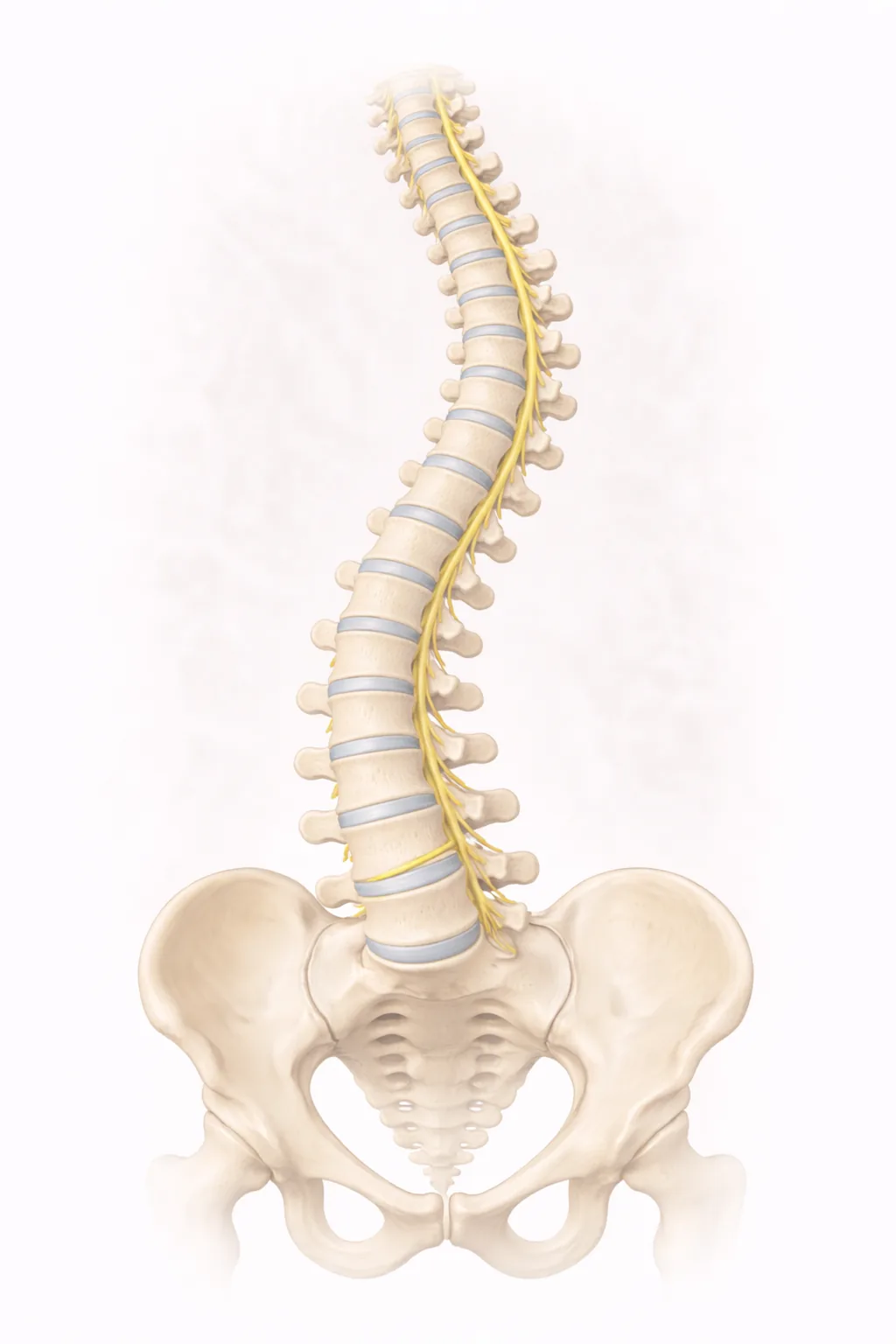
When a patient walks into my clinic in San Antonio or Houston with a diagnosis of dextroscoliosis, the first thing I do is clarify what that term actually means. Many people assume it's a serious condition, but the reality is more nuanced. Dextroscoliosis—a sideways curvature of the spine toward the right—is the most common type of scoliosis, and understanding it is the first step toward appropriate management.
In this post, I'll explain what dextroscoliosis is, why it develops, how to recognize it, and what your treatment options really are. Whether you or a family member has been diagnosed, this information will help you make informed decisions with your surgeon.
What Is Dextroscoliosis?
Dextroscoliosis describes a spine that curves toward the right side of the body. It's the opposite of levoscoliosis, which curves to the left. The direction matters for diagnosis and sometimes for clinical management, though both types are treated using similar principles.
When I measure a curve on X-rays, I use the Cobb angle method—essentially measuring the angle of the deviation. Most dextroscoliotic curves appear in the thoracic spine (mid-back region), though they can occur in the lumbar spine or span both regions (thoracolumbar curves).
The spinal curve itself can be C-shaped (a single curve) or S-shaped (two curves that partially balance each other). An S-shaped curve might seem worse visually, but the biomechanics and treatment approach depend more on the magnitude of each curve than its shape.
Why Dextroscoliosis Develops
In my years treating scoliosis at both my San Antonio and Houston locations, I've seen dextroscoliosis develop for several different reasons:
Idiopathic Scoliosis (80–85% of cases) This is by far the most common form. Idiopathic simply means we don't know the exact cause. What we do know is that it tends to appear during periods of rapid growth—typically in childhood and early adolescence. Genetics play a role; if your parents or siblings have scoliosis, your risk is higher. But idiopathic scoliosis is not caused by poor posture, athletic activity, or carrying a heavy backpack, despite what many people believe.
Congenital Dextroscoliosis Some children are born with vertebrae that didn't develop normally in the womb. These structural abnormalities can lead to curves that appear early in life and may progress quickly. Congenital cases sometimes require earlier intervention than idiopathic ones.
Neuromuscular Causes Conditions like cerebral palsy, muscular dystrophy, or spina bifida weaken the muscles that support the spine, allowing curves to develop. These often progress more aggressively than idiopathic cases.
Degenerative or Adult-Onset Curves As we age, discs lose water content and joints wear down. This can cause the spine to shift and curve. Adults with degenerative scoliosis often develop dextroscoliosis in the lumbar spine.
Recognizing the Signs
Symptoms vary based on age and curve severity. Many children with mild dextroscoliosis have no symptoms at all—the curve is simply noticed during a routine physical exam or school screening.
Visual signs may include:
- Uneven shoulders (one higher than the other)
- Prominence of the rib cage on one side
- An uneven waistline
- A visible lean to one side when standing
In adults, symptoms are more common:
- Back or neck pain, often worse with activity
- Stiffness and reduced spinal mobility
- Fatigue from muscle strain
- In severe thoracic cases, breathing restrictions due to rib cage compression
Children rarely complain of pain, which is why visual screening and physical exams are so important during growth years.
Diagnosis: Getting an Accurate Picture
My diagnostic approach is straightforward. I start with a clinical exam—assessing posture, spinal alignment, and range of motion using specific scoliosis testing maneuvers like the Adams forward bend test.
Imaging is essential for measurement and monitoring:
- X-rays are the gold standard. They show the Cobb angle, which determines severity and guides treatment decisions.
- MRI or CT scans are ordered when I suspect neurological involvement, congenital abnormalities, or other underlying structural issues.
The Cobb angle is critical. It's the angle between the top and bottom vertebrae of the curve and is measured consistently over time to track progression.
Treatment: A Spectrum of Options
Here's where I think many patients get confused. Dextroscoliosis isn't automatically a "surgery case." Treatment depends on three main factors: the severity of the curve (Cobb angle), the patient's age and growth potential, and symptoms.
Observation (Curves <20°) Mild curves warrant regular monitoring—typically X-rays every 4-6 months—but no active treatment. Many mild curves never progress and require nothing more than routine follow-up.
Physical Therapy and Posture Work Strengthening the core muscles that stabilize the spine can help with pain and posture, especially in adults. While PT alone won't reverse an existing curve, it's a valuable component of managing symptoms and preventing progression.
Bracing (For Growing Children) Children and adolescents with curves between roughly 25–40° who still have growth remaining may benefit from a brace. A well-fitted brace can prevent progression in many growing patients and help them avoid surgery during their teenage years. Bracing works because it halts progression; it doesn't correct existing curves, but that's often enough until skeletal maturity.
Surgical Intervention (Curves >45–50° or Symptomatic) When I recommend surgery, it's because either the curve is large enough that progression poses real risks, or the patient is experiencing significant pain or functional limitations. Surgery stabilizes the spine, halts progression, and often reduces pain. For adults, surgery can provide substantial relief—especially when degenerative changes are contributing to symptoms.
Children vs. Adults: Different Priorities
Growing children with dextroscoliosis face a different risk profile than adults. Their curves tend to progress faster, and the goal is often to prevent surgery by catching progression early and using bracing effectively.
Adults, by contrast, are typically more concerned with pain, functional ability, and stability. An adult with a 35° curve might never need surgery if they're symptom-free; conversely, a smaller curve causing significant pain might warrant intervention.
Next Steps: When to See a Spine Surgeon
If dextroscoliosis has been diagnosed, or if you've noticed signs of spinal curvature, a consultation with a spine surgeon can clarify your options. I see patients at both my San Antonio and Houston locations and work with each patient to develop a treatment plan that matches their age, curve severity, and goals.
Don't let uncertainty about dextroscoliosis lead to unnecessary worry or, conversely, to delayed care. Understanding what you have is the first step—and it often turns out to be far less daunting than patients initially fear.
For more details on surgical options, see my scoliosis surgery page. And if you're curious about the opposite curve pattern, read about levoscoliosis to understand the differences.
Ready to discuss your specific situation? Schedule a consultation with me in San Antonio or Houston today.
Related Reading:
Frequently Asked Questions
What is the Cobb angle and why is it important in dextroscoliosis?
The Cobb angle measures the degree of spinal curve in degrees. It's the standard for assessing scoliosis severity and guiding treatment decisions. A 25-degree curve requires different management than a 45-degree curve.
Does poor posture cause dextroscoliosis?
No. Idiopathic dextroscoliosis is not caused by bad posture, heavy backpacks, or physical activity. It's a structural condition with genetic factors that develops during growth periods. Posture training may help manage symptoms, but it won't prevent or cause the curve.
Can adults develop dextroscoliosis for the first time?
Yes. While idiopathic scoliosis typically appears in childhood or adolescence, adults can develop degenerative scoliosis (often curving right in the lumbar spine) due to age-related disc degeneration and facet joint arthritis.
How often should I get X-rays if I have dextroscoliosis?
For stable, mild curves, X-rays every 6-12 months are typically appropriate. Growing children may need more frequent monitoring. Once skeletal maturity is reached and curves have stabilized, annual or biannual imaging is usually sufficient.
What spine surgeon specialists treat dextroscoliosis in San Antonio and Houston?
Dr. Steven Cyr is a board-certified orthopedic spine surgeon with extensive scoliosis training who serves patients in both San Antonio and Houston. He specializes in both conservative management and surgical correction of complex curves.