As a spine surgeon trained at Mayo Clinic with fellowship training in both neurosurgery and orthopedic spine surgery, I've evaluated hundreds of scoliosis patients—both in my San Antonio and Houston offices. One pattern I consistently encounter is the assumption that all spinal curves are created equal. They're not. Today, I want to discuss levoscoliosis, a left-curving spinal deformity that, while less common than its right-sided counterpart, often warrants more careful clinical attention than patients expect.
What Is Levoscoliosis?
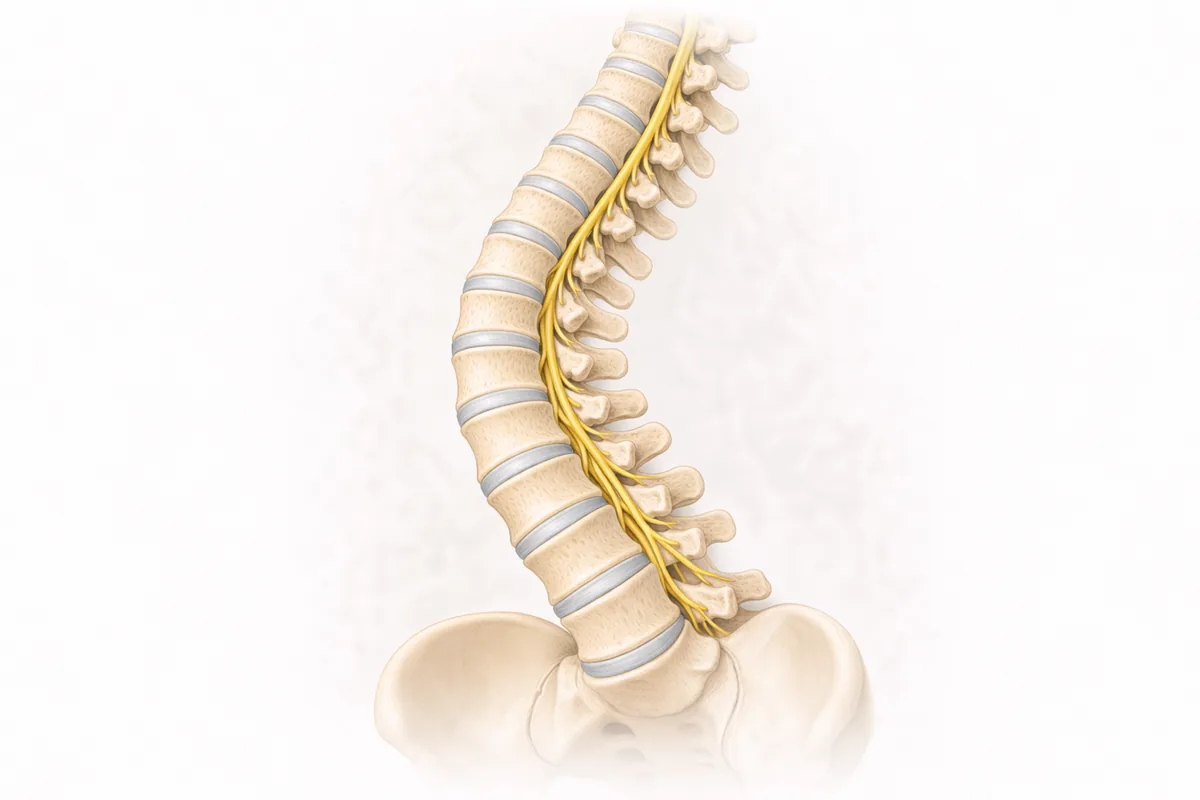
Levoscoliosis simply means your spine curves toward the left side when viewed from behind. It's the opposite of dextroscoliosis (right curvature), which accounts for the majority of scoliosis cases, especially in the thoracic spine. The direction of curvature is determined by anatomical fact, not severity—but it does matter for diagnosis and clinical decision-making.
The curve can affect your thoracic spine (mid-back), lumbar spine (lower back), or span multiple segments. Regardless of location, a left-curving pattern influences how your vertebrae rotate, how your ribs align, how your muscles compensate for the deformity, and ultimately, how we interpret imaging and plan treatment.
Why Spine Surgeons Pay Closer Attention to Left-Sided Curves
Here's something most patients don't realize: most adolescent idiopathic scoliosis (AIS) curves to the right, especially in the thoracic region. When we see a left-curving pattern—particularly a left thoracic curve—we're looking at something less typical. This statistical rarity means that when a left curve appears, it's worth asking why.
In my practice, I find that left thoracic curves prompt more detailed imaging early on. We're screening for potential secondary causes—neuromuscular conditions, congenital vertebral anomalies, or degenerative changes—that might explain the atypical pattern. While a left curve isn't inherently more dangerous than a right curve of the same magnitude, it is a pattern that asks for thorough evaluation.
Interestingly, when we look at the lumbar spine specifically, left-sided curves are actually more common. This is an important distinction because lumbar curves behave differently from thoracic curves in terms of progression risk and long-term outcomes.
Common Causes of Levoscoliosis
The etiology matters because it shapes our management strategy. Here are the causes I encounter most frequently in my patients:
Idiopathic Scoliosis
The majority of levoscoliosis cases, especially in adolescents and young adults, have no identifiable structural cause. We call this idiopathic. It develops during the growth phase, and the left-curving pattern is simply a variation in how the spine chose to deform.
Congenital Abnormalities
Some patients are born with structural spine differences—asymmetric vertebral body development, hemivertebrae, or unsegmented bars—that predispose the spine to curve left. These cases require early specialist evaluation because congenital curves often progress more predictably than idiopathic curves.
Neuromuscular Conditions
Cerebral palsy, muscular dystrophy, spinal muscular atrophy, and other neuromuscular disorders can disrupt the normal muscular balance that stabilizes the spine, leading to either left or right curvature. These curves tend to be more severe and progress more aggressively.
Degenerative Changes
In adults, particularly those over 50, levoscoliosis can develop secondary to disc degeneration, facet arthritis, and vertebral body collapse. This degenerative scoliosis often causes pain and functional limitation beyond just the structural curve itself.
What Levoscoliosis Looks and Feels Like
Many patients come to my San Antonio and Houston offices because a family member or healthcare provider noticed something asymmetrical. Here are the clinical signs that typically bring people in:
- Uneven shoulders – one shoulder blade sitting higher than the other
- Visible torso lean – the trunk shifts noticeably to the left
- Rib or flank prominence – asymmetric rib cage, sometimes with a rib hump
- Hip imbalance – hips tilted or shifted relative to the shoulders
- Waistline asymmetry – one side of the waist appears higher or narrower
In adults, especially those with degenerative levoscoliosis, the presentation is different. Pain becomes the primary complaint—often localized to the side of the curve, aggravated by standing or walking, and sometimes accompanied by stiffness or muscle fatigue. Some patients report feeling off-balance or experiencing postural fatigue after extended activity.
How I Diagnose Levoscoliosis
My diagnostic approach is systematic and evidence-based:
Physical Examination
I assess spinal alignment, shoulder and hip symmetry, skin markings over the spine, and neurological function. The forward-bend test (Adam's test) helps quantify the degree of rib or spinal rotation.
Standing Spine X-rays
This is essential. We measure the Cobb angle—the degree of curvature—and document the location and direction of the curve. For left-sided curves, I'm particularly interested in whether they're progressing over time.
MRI Imaging
If a patient reports neurological symptoms (numbness, weakness, tingling), or if the curve pattern seems atypical, I order MRI to rule out spinal cord abnormalities, tethering, or nerve compression.
Advanced Imaging
For complex congenital cases or when surgical planning is necessary, CT scans provide clearer visualization of vertebral anatomy and rotation.
Treatment Options: From Conservative Care to Surgery
Most levoscoliosis cases do not require surgery. My approach prioritizes the least invasive intervention that addresses the patient's specific situation.
Observation
For mild, stable curves with no symptoms and no signs of progression, watchful waiting with periodic X-rays is often appropriate. I counsel patients and families on what progression looks like and when to seek follow-up care.
Physical Therapy and Exercise
Core strengthening, postural training, and flexibility work can improve pain, reduce fatigue, and help with body awareness. This is particularly valuable for adults with degenerative levoscoliosis and for adolescents with mild curves.
Bracing
In growing adolescents with curves between 25-40 degrees, bracing can slow or halt progression during the remaining growth years. Modern braces are less intrusive than older designs, and compliance remains the biggest challenge.
Pain Management
For adults with degenerative scoliosis causing discomfort, targeted therapies—physical therapy, anti-inflammatory medication, epidural injections—often provide sufficient relief without surgery.
When Surgery Becomes Necessary
I consider surgical intervention when one or more of these factors align:
- Significant curve magnitude – typically 50+ degrees, or progressive curves approaching that threshold
- Documented progression – curves growing measurably over time despite conservative care
- Functional limitation – pain, breathing difficulty, or balance issues significantly impacting daily life
- Neurological symptoms – nerve compression causing weakness, numbness, or loss of bladder/bowel control
For adolescents, the primary surgical indication is curve progression. For adults, it's typically pain unresponsive to conservative therapy or neurological deficits.
My scoliosis surgery uses modern fusion techniques with instrumentation to correct the curve, halt progression, and stabilize the spine. The goal is always to optimize function and quality of life while minimizing surgical morbidity.
Levoscoliosis vs. Dextroscoliosis: Key Differences
Many patients ask whether a left curve behaves differently from a right curve. The answer is nuanced. A left thoracic curve of 45 degrees is statistically less common than a right thoracic curve of the same magnitude, which means it often triggers more extensive workup. However, the natural history and treatment principles are similar once we've ruled out secondary causes.
If you're curious about right-sided scoliosis, my post on dextroscoliosis provides detailed comparison.
The Bottom Line
Levoscoliosis is a left-curving spinal deformity that warrants thoughtful evaluation, particularly when it appears in the thoracic spine. The good news is that most cases respond well to conservative management, and surgery—when indicated—is highly effective.
If you or a family member has been diagnosed with levoscoliosis and you're unsure what comes next, I'd encourage you to schedule a consultation. Whether you're in the San Antonio or Houston area, my goal is to demystify your condition, review your imaging with you, and develop a treatment plan tailored to your specific needs.
Your spine health is too important to leave to assumptions.
Related Reading:
Dr. Steven Cyr is a board-certified orthopedic spine surgeon with extensive training in complex scoliosis management. He serves patients throughout South Texas from his offices in San Antonio and Houston.
Frequently Asked Questions
Is levoscoliosis more common than dextroscoliosis?
No. Left-curving (levo) scoliosis is actually less common than right-curving (dextro) scoliosis, especially in the thoracic spine. This statistical rarity is why left-sided curves often warrant more detailed imaging and workup.
Can levoscoliosis cause breathing problems?
Yes, if the curve is severe and located in the thoracic spine. Large left-sided thoracic curves can compress the rib cage and potentially affect lung capacity, though this is more common with curves exceeding 50 degrees.
How much does a curve need to progress before surgery is recommended?
Surgery is typically considered when curves are 50+ degrees, showing documented progression over time, or causing functional limitation or neurological symptoms. Mild, stable curves below 25 degrees usually require only observation.
Are adolescents with levoscoliosis candidates for bracing?
Yes. Growing adolescents with curves between 25-40 degrees can benefit from modern bracing to slow or halt progression during growth years. Success depends heavily on brace compliance and remaining growth potential.
Can I get levoscoliosis treatment in San Antonio or Houston with Dr. Cyr?
Absolutely. Dr. Cyr has extensive fellowship training in complex scoliosis management and maintains practices in both San Antonio and Houston, offering the same level of specialized spine care at both locations.