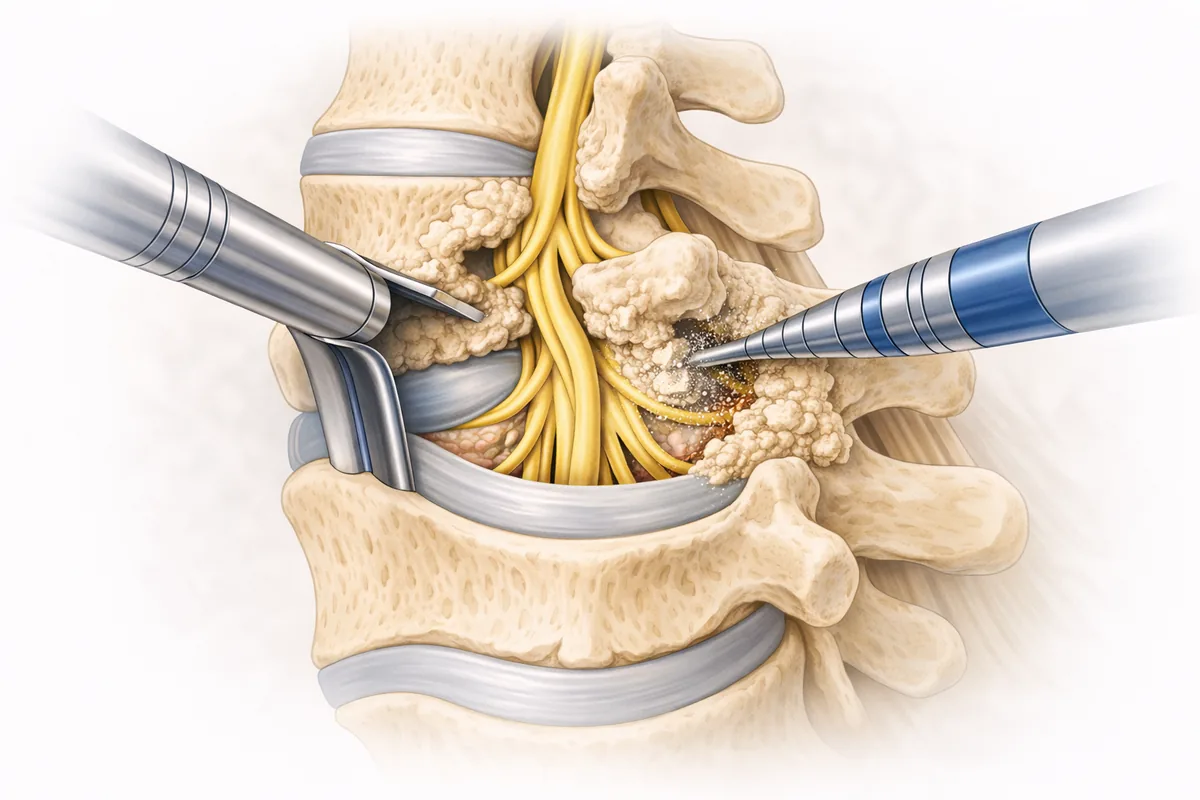
What Is Spinal Stenosis?
Spinal stenosis is the narrowing of the spaces within your spine, which puts pressure on the nerves that travel through it. This condition most commonly occurs in the lower back (lumbar stenosis) and neck (cervical stenosis), and is one of the most frequent reasons patients seek spine surgery consultation.
What Causes It?
The most common cause of spinal stenosis is age-related wear and tear on the spine, also known as osteoarthritis. As we age, the ligaments of the spine can thicken, bone spurs may develop, discs may bulge, and facet joints can enlarge — all of which contribute to narrowing of the spinal canal.
Other causes include herniated discs, spinal injuries, spinal tumors (rare), and conditions like Paget's disease that affect bone metabolism.
Recognizing the Symptoms
Symptoms of spinal stenosis often develop gradually and may include pain or cramping in the legs when standing or walking (claudication), numbness or tingling in the extremities, weakness in the legs or arms, back pain, and in severe cases difficulty with balance.
A hallmark sign of lumbar stenosis is that symptoms often improve when leaning forward or sitting — which is why patients may notice they can walk further when pushing a shopping cart, for example.
Treatment Options
Conservative Approaches
Many patients find relief through physical therapy and exercise, anti-inflammatory medications, epidural steroid injections, and activity modification.
When Surgery Is Recommended
Surgery is typically considered when conservative treatments no longer provide adequate relief, or when neurological symptoms (weakness, numbness) are progressing. The most common surgical approach is a decompression procedure — removing the tissue that is pressing on the nerves.
Dr. Cyr evaluates each case individually and may recommend minimally invasive or endoscopic techniques when appropriate, which can significantly reduce recovery time. For cases requiring fusion in addition to decompression, he employs a combined approach to address both nerve compression and spinal instability.
For a deeper dive into modern treatment approaches and how Dr. Cyr stages stenosis care, read Newest Treatment for Spinal Stenosis. You can also learn more about spinal stenosis symptoms and treatment options or explore lumbar fusion surgery for cases requiring stabilization.
The Bottom Line
Spinal stenosis is a treatable condition. If you're experiencing symptoms that are limiting your daily activities, a consultation can help determine the best course of action — whether conservative treatment or surgical intervention. Dr. Cyr offers specialized stenosis evaluation and treatment at practices in both San Antonio and Houston, ensuring expert spine care is accessible in your area.
Frequently Asked Questions
At what age does spinal stenosis typically develop?
Spinal stenosis most commonly affects adults over age 50, though it can occasionally develop in younger patients. It's primarily age-related wear and tear (osteoarthritis) that creates the narrowing, though congenital narrowing can predispose younger patients to earlier onset.
Why do stenosis symptoms improve when I lean forward or sit?
Leaning forward increases the space in your spinal canal, decompressing the nerves. This is why patients with stenosis often walk further when pushing a shopping cart or can sit comfortably while standing is painful—forward flexion relieves the pressure.
Is spinal stenosis progressive and will it always get worse?
Not necessarily. While stenosis is a chronic condition, many patients stabilize and don't experience significant progression. Early intervention with physical therapy and activity modification can often halt or slow worsening.
What imaging is best for diagnosing spinal stenosis?
MRI is the gold standard as it clearly shows the soft tissues compressing the nerves—discs, ligaments, and the spinal cord itself. CT is useful when bone detail is needed. X-rays are less specific but can show degenerative changes and alignment issues.
Can I find a spinal stenosis specialist in San Antonio and Houston?
Yes. Dr. Cyr is a board-certified spine surgeon trained at Mayo Clinic who specializes in stenosis diagnosis and management. He maintains offices in both San Antonio and Houston to serve patients throughout South Texas.